
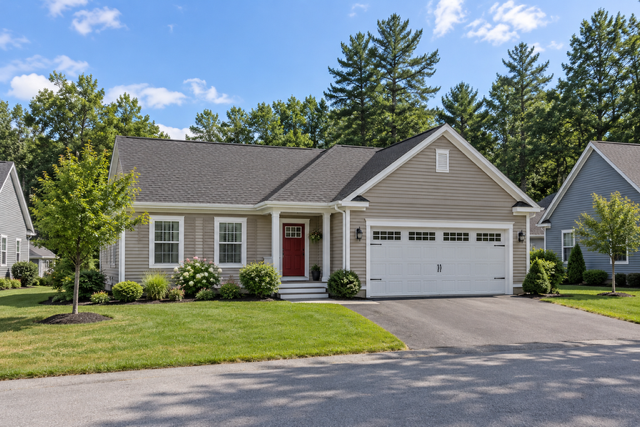
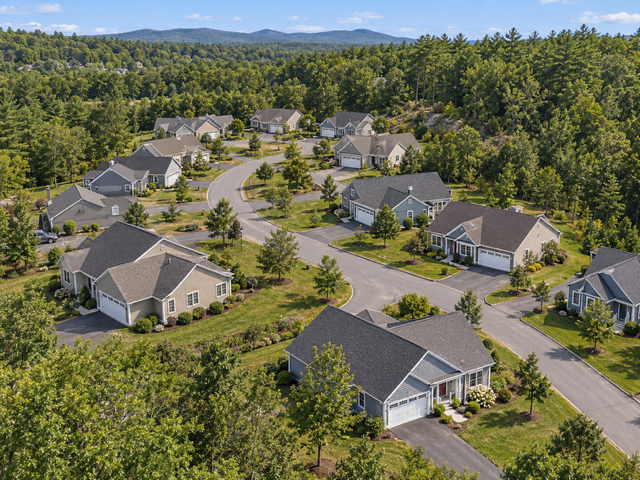
Southern New Hampshire has become an increasingly popular destination for buyers who want to simplify their homes without giving up an active, independent lifestyle. From condominium buildings overlooking a golf course to detached homes with first-floor primary suites, the region offers a surprisingly wide range of 55+ communities.
For some buyers, the appeal is having someone else handle landscaping and snow removal. Others are drawn to newer, more accessible homes, social opportunities, or the chance to live near people at a similar stage of life. There are also buyers who simply want a quieter neighborhood and fewer home-maintenance responsibilities.
But 55+ communities are not all alike. The ownership structure, monthly fees, amenities, age requirements and community rules can vary considerably. Understanding those differences is essential before deciding whether this lifestyle—and a particular community—is right for you.
What Is a 55+ Community?
A 55+ community is housing that is intended and operated for older adults under federal and New Hampshire fair-housing rules. In general, qualifying 55+ housing must have at least 80 percent of its occupied homes occupied by at least one person age 55 or older, and the community must publish and follow policies showing that it is intended to serve people in that age group.
That rule is sometimes misunderstood. It does not necessarily mean that anyone under 55 can freely purchase or occupy one of the remaining homes. Each community may adopt its own requirements, and some are stricter than the minimum allowed by law. Rules concerning a younger spouse or partner, adult children, inherited property, caregivers and surviving spouses can also differ.
Before purchasing, buyers should obtain the community’s written age-verification and occupancy policies and confirm exactly how those provisions apply to everyone who will live in the home.
It is also important to understand that a 55+ community is not automatically a retirement facility, assisted-living residence or continuing-care community. Most are conventional homes or condominiums designed for independent living. Medical care, meals, transportation and personal assistance are generally not included unless a particular community specifically provides them.
What Is It Like to Live in a 55+ Community?
The experience depends heavily on the community you choose.
Some Southern New Hampshire communities have clubhouses, fitness rooms, walking trails, pickleball courts, golf access and busy social calendars. Others are small neighborhoods with few shared amenities and a much more private atmosphere. A community can have an active social scene, but participation is generally optional.
The homes themselves are often designed with long-term convenience in mind. Common features include:
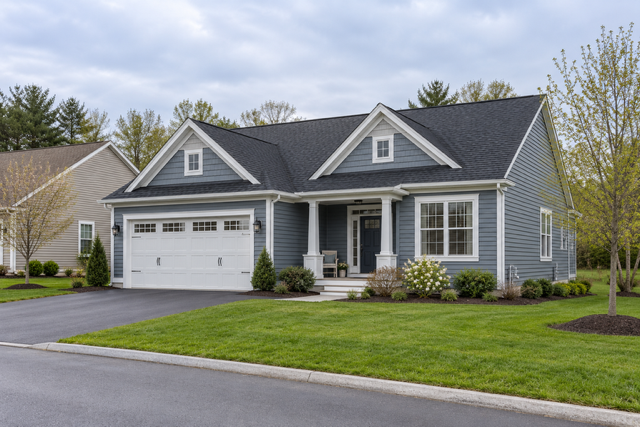
● A first-floor primary bedroom and bathroom
● Single-level living or an elevator in a garden-style building
● Attached garages
● Open-concept living areas
● Wider doorways or fewer steps
● Guest bedrooms, lofts or finished lower levels
● Exterior maintenance provided by an association
Many residents appreciate being able to travel without worrying as much about mowing the lawn or clearing snow. Others enjoy having neighbors nearby while still owning a private home.
There can be tradeoffs. Homes may be closer together than in a traditional subdivision. Rules may limit exterior changes, fences, recreational vehicles, rentals or the number and size of pets. Association fees can rise, and owners may face a special assessment if reserves are inadequate for a major future expense.
The best choice is not simply the community with the longest amenity list. It is the one whose home style, financial structure, rules and day-to-day atmosphere fit the way you actually want to live.
What Is It Like to Live in a 55+ Community?
The experience depends heavily on the community you choose.
Some Southern New Hampshire communities have clubhouses, fitness rooms, walking trails, pickleball courts, golf access and busy social calendars. Others are small neighborhoods with few shared amenities and a much more private atmosphere. A community can have an active social scene, but participation is generally optional.
The homes themselves are often designed with long-term convenience in mind. Common features include:
● A first-floor primary bedroom and bathroom
● Single-level living or an elevator in a garden-style building
● Attached garages
● Open-concept living areas
● Wider doorways or fewer steps
● Guest bedrooms, lofts or finished lower levels
● Exterior maintenance provided by an association
Many residents appreciate being able to travel without worrying as much about mowing the lawn or clearing snow. Others enjoy having neighbors nearby while still owning a private home.
There can be tradeoffs. Homes may be closer together than in a traditional subdivision. Rules may limit exterior changes, fences, recreational vehicles, rentals or the number and size of pets. Association fees can rise, and owners may face a special assessment if reserves are inadequate for a major future expense.
The best choice is not simply the community with the longest amenity list. It is the one whose home style, financial structure, rules and day-to-day atmosphere fit the way you actually want to live.
For some buyers, the appeal is having someone else handle landscaping and snow removal. Others are drawn to newer, more accessible homes, social opportunities, or the chance to live near people at a similar stage of life. There are also buyers who simply want a quieter neighborhood and fewer home-maintenance responsibilities.
But 55+ communities are not all alike. The ownership structure, monthly fees, amenities, age requirements and community rules can vary considerably. Understanding those differences is essential before deciding whether this lifestyle—and a particular community—is right for you.

Do You Have to Be 55 to Buy?
Not always—but this is one of the first questions to verify.
A community may require at least one occupant to be 55 or older, may impose a minimum age on all permanent occupants, or may have additional restrictions for younger residents. Ownership and occupancy are not necessarily treated the same way. For example, a younger person might be allowed to hold title for estate-planning purposes but not live in the home as a permanent resident.
Never rely on a general description such as “55+” to determine eligibility. The recorded condominium documents, declaration, bylaws and current community policies control.
How Do Association Fees Work?
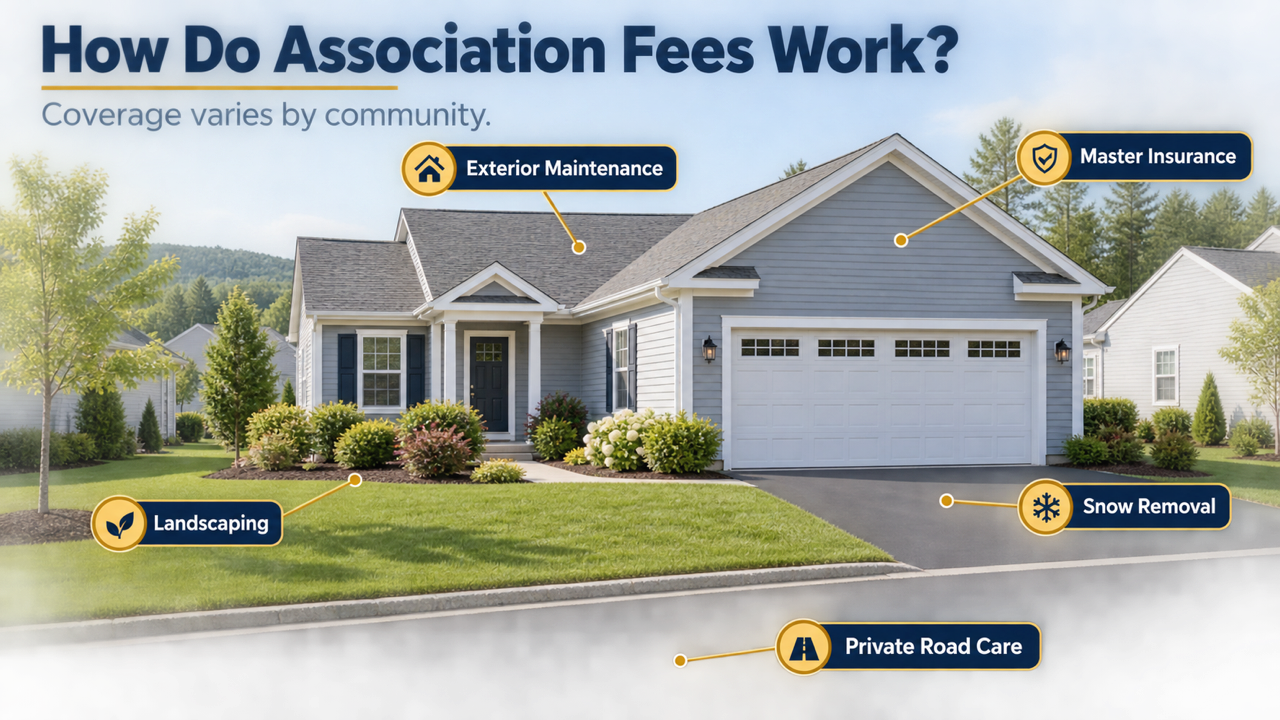
Many 55+ homes in Southern New Hampshire are condominiums, including some that look and feel like detached single-family homes. Owners typically own their unit and share an interest in common land, private roads or amenities through a condominium or homeowners association. In New Hampshire, a condo rider form discloses what is covered in the fees, your Realtor can get that information for you.
Monthly fees may cover some combination of:
● Landscaping and lawn care
● Snow removal
● Trash removal
● Private road maintenance
● Exterior building maintenance
● Master insurance
● Clubhouse and recreational amenities
● Water, sewer or other utilities
● Contributions to reserve funds
The lowest fee is not automatically the best value. A low fee may cover fewer services or may not adequately fund future repairs. A higher fee may include significant maintenance, utilities or amenities that a homeowner would otherwise pay for separately.
Buyers should compare both the amount of the fee and what it includes. It is also wise to ask how often fees have increased, whether any special assessments are pending, and which costs remain the individual owner’s responsibility.

What Should You Review Before Buying in a 55+ community?
Whether you are purchasing new construction or a resale, take time to review the association and condominium documents. Important items include:
1. Age and occupancy restrictions. Confirm who may live in the home, how ages are verified and how the rules address guests, caregivers, children, inheritance and surviving spouses.
2. The operating budget and financial statements. Determine how the association collects and spends money and whether owners are behind on their dues.
3. Reserve funds and reserve studies. Look at whether the association is preparing for long-term expenses such as paving, roofs, siding, elevators or clubhouse repairs.
4. Pending or recent special assessments. Ask whether owners have been charged—or are likely to be charged—above the regular monthly fee.
5. Master insurance coverage. Understand what the association insures and what coverage you will need individually.
6. Rules and restrictions. Review policies involving pets, parking, pickup trucks, RVs, rentals, visitors, fences, gardens, generators and exterior modifications.
7. Meeting minutes and pending litigation. Recent board minutes can reveal recurring maintenance concerns, owner disputes or projects that are not obvious during a showing.
8. Exactly what maintenance is included. “Maintenance-free” is a marketing phrase, not a legal definition. Confirm responsibility for windows, doors, decks, roofs, driveways, utilities and everything else that matters to you.
New-construction buyers should also study the public offering statement, proposed budget, warranty, site plan, standard specifications, upgrade pricing and completion schedule. Find out how many homes have been sold, how long the developer expects to control the association and whether all proposed amenities are complete, under construction or merely planned.
The New Hampshire Department of Justice specifically encourages condominium buyers to review the public offering statement carefully because it contains important disclosures from the developer.
New Construction or Resale?
New construction can provide modern layouts, energy-efficient systems, current finishes and the ability to select certain options. It may also require patience. Construction schedules can change, newer associations have limited operating history, and promised amenities may not be finished when the first residents move in.
A resale offers the advantage of seeing the completed home and established neighborhood. Buyers can review the association’s actual financial history, speak with residents and observe how the property is maintained. The tradeoff is that resale opportunities in sought-after communities can be infrequent, and the home may need updating.
It is worth considering both. Buyers who focus only on communities with active sales offices can miss excellent established neighborhoods, while buyers looking only at resales may overlook a new community whose design better suits their long-term needs.

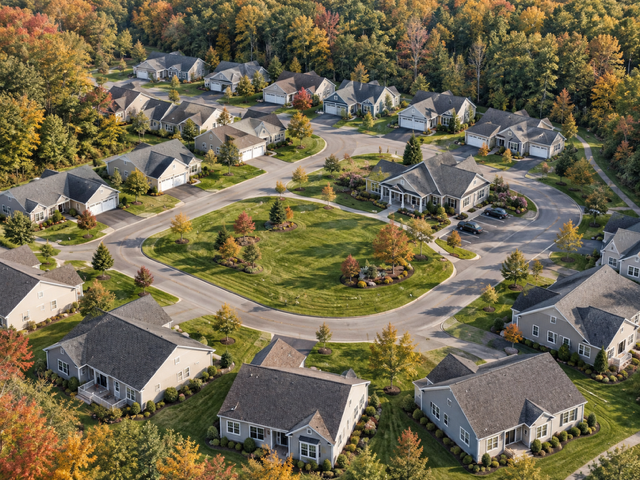
Examples of 55+ Communities in Southern New Hampshire
The following is a starting point rather than a complete directory. Availability, construction phases and age policies can change, so current status and eligibility should always be verified before relying on this list.
Newer Communities Currently Marketing New Homes
● Atkinson Heights at Atkinson Resort & Country Club — Atkinson: A large garden-style condominium community overlooking the golf course, with single-level residences, underground parking and a community center.
● Copyhold Mill Estates — Fremont: A smaller community of two-bedroom condominium homes designed around main-level and low-maintenance living. The developer reports that its furnished model and sales office are open.
● River Run — Brentwood: Detached condominium homes along the Exeter River, with open space and a clubhouse. The community is currently marketing its final phase.
● Summerwind Place — Greenland: Energy-efficient detached homes near Portsmouth with first-floor primary suites and planned or available amenities including a clubhouse, pickleball courts and walking trails.
● The Cliffs at Evergreen — Auburn: Detached condominium homes with first-floor primary suites and community amenities. The community is currently marketing its remaining homes.
Because new-construction inventory changes quickly, buyers should verify which homes, lots and phases are actually available and whether a home is complete, under construction or yet to be started.
Established Communities Where Resales May Become Available
● The Nevins — Londonderry
● Hickory Woods — Londonderry
● Cross Farm — Londonderry
● Forest Hills — Londonderry
● The Paddock — Salem
● Oak Ridge Estates — Hudson
● Summerfield of Amherst — Amherst
● RiverWalk at Bedford — Bedford
● Berry Hill Estates — Hooksett
● Brook Ridge — Hooksett
● Black Rocks Village — Fremont
● The Vineyards — Stratham
● Ray Farm — Exeter
● The Villages at Three Ponds — Brentwood
These communities differ significantly in home style, size, amenities, fees and proximity to shopping, medical care and major roads. Some may go months without a home coming on the market. A buyer who has identified several suitable communities can benefit from monitoring new listings closely rather than waiting until a general online search happens to show one.

Questions to Ask Yourself Before Choosing a Community
● Do I want a detached home, attached townhouse or garden-style condominium?
● Is true one-level living important, or would a first-floor primary suite be enough?
● Which maintenance responsibilities do I want the association to handle?
● Would I use a clubhouse, fitness room, golf course or pickleball court?
● How important is proximity to family, healthcare, shopping, Boston, Manchester or the Seacoast?
● Do the pet, parking, rental and visitor rules fit my lifestyle?
● Am I comfortable with the association’s finances and monthly fee?
● Will this home still work for me if my mobility or household needs change?
Visiting at different times of day can also be revealing. Notice traffic, noise, guest parking, how residents use the common spaces and whether the neighborhood feels more social or private. If possible, talk with people who already live there. Their experience can help you understand what the brochures cannot show.
Is a 55+ Community Right for You?
For the right buyer, a 55+ community can offer an appealing combination of independence, convenience and connection. The key is to look beyond the model home and compare the details that will shape everyday life: the association’s finances, the written rules, what the monthly fee covers, the home’s accessibility and the overall culture of the neighborhood.
Southern New Hampshire offers choices ranging from quiet, established neighborhoods to amenity-rich new construction. With a thoughtful search, it is possible to find a home that reduces the burden of maintenance while keeping you close to the people, places and activities you enjoy.
If you are considering a 55+ home in Southern New Hampshire, I can help you compare communities, monitor hard-to-find resales, evaluate new-construction opportunities and review the practical differences before you make a decision. I’d helped dozens of buyers and sellers in 55+ communities. Contact me, Josh Judge, to start a personalized search and learn more.


Accuracy note for publication: Community examples and marketing status were reviewed in September 2026. Availability, amenities, fees, construction phases and occupancy requirements can change. Buyers should verify current information and review all governing documents before purchasing. This article is for general information and is not legal, tax or financial advice.
——————————————-Additational Information—————————-
● New Hampshire Commission for Human Rights: Housing for Older Persons — https://www.humanrights.nh.gov/types-discrimination/housing-discrimination/housing-older-persons
● New Hampshire condominium and subdivision registration information — https://www.doj.nh.gov/citizens/consumer-protection-antitrust-bureau/condominium-and-subdivision-registration